This explanation is written for property managers, municipal facilities staff, and contractors overseeing commercial parking lot rehabilitation. Getting milling and paving right protects drainage, keeps ADA transitions intact, and extends how long a lot lasts before the next major repair.
The problem: "mill and pave" shows up constantly in proposals but gets treated as interchangeable with a basic overlay. It isn't. This article breaks down what the process actually is, why contractors use it, how it works step-by-step, and the situations where it's the wrong call entirely.
Key Takeaways
- Milling strips the worn surface layer, leaving the compacted base undisturbed
- Curb heights, drainage slopes, and ADA-compliant transitions stay intact, unlike with a direct overlay
- The process follows a set sequence: mill, clean, prep, pave, then compact
- Milled asphalt (RAP) is almost always recycled, cutting cost and material waste
- It works best on lots with a sound base and worn surface, not base failure
What Is the Milling and Paving Process?
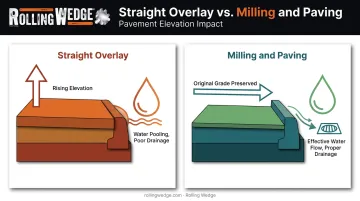
Milling and paving is a two-part resurfacing method: a cold planer grinds away the top layer of worn asphalt, and fresh hot mix asphalt replaces it at the same depth. The goal is straightforward: a restored, level driving surface at the original elevation, with better bonding between old and new material than a simple overlay could ever provide.
That elevation detail is the whole ballgame. A straight overlay skips milling and just lays new asphalt on top of the old surface. Do that enough times and a lot's grade creeps upward, catches curbs, and throws off drainage. Milling avoids that height build-up entirely.
Why Milling and Paving Is Used on Parking Lots
Property managers choose this method for a few concrete reasons:
- Preserved drainage and elevation: water keeps flowing toward the same drains and low points the lot was originally engineered for
- ADA and curb-height compliance: accessible ramps and transitions stay within code
- Stronger bond: new asphalt adheres better to a milled, tacked surface than to old weathered pavement
These benefits matter most on lots that already show the wear milling is meant to fix: uneven surfaces, reflective cracking, and standing water in low spots. Milling addresses all three by removing the failed material rather than burying it.
Skip milling and problems compound. As alligator cracking progresses, pieces break away and potholes form, letting moisture into the subbase and eroding pavement support from underneath. Layering new asphalt over that damage doesn't fix it. It hides the problem temporarily, and the same cracks resurface within a season or two.
NAPA notes that milling restores original surface grade, corrects drainage problems, and reestablishes curb-and-gutter lines. That's why it's become the default approach for aged commercial lots, not just a regulatory checkbox. It's simply better engineering.
How the Milling and Paving Process Works
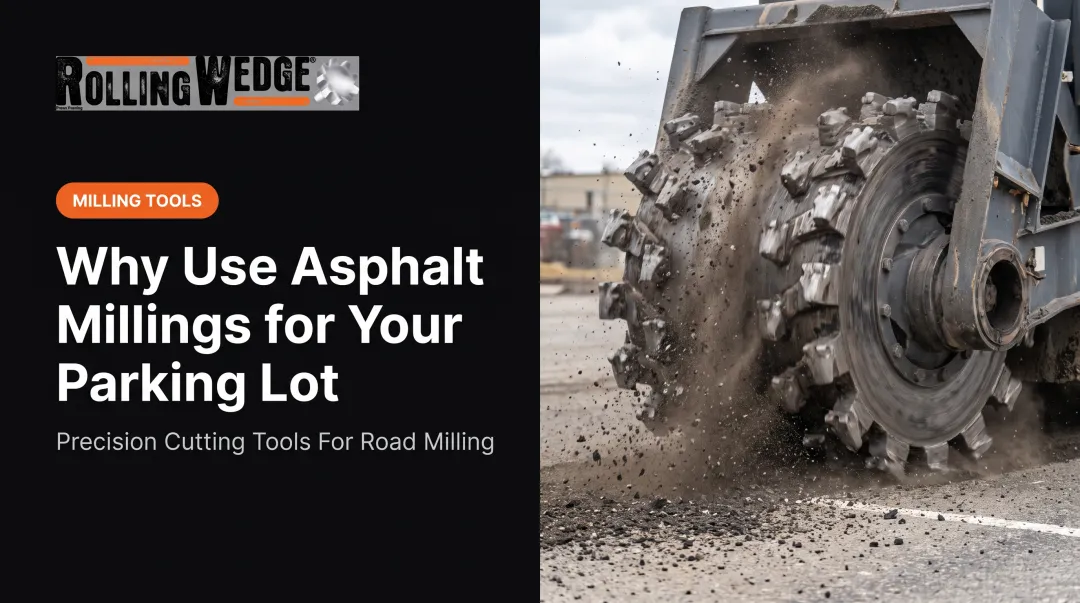
At a high level, the flow is consistent regardless of lot size. A milling machine grinds the surface to a specified depth, crews haul off the millings, clean and tack-coat the exposed base, then lay and compact new asphalt before traffic returns.
Milling depth generally runs 1.5 to 3 inches, though the exact depth depends on how deteriorated the surface is and what elevation the finished lot needs to hit. A shallow, cosmetic mill looks nothing like the removal required on a lot with deep rutting.
Equipment scales with the job:
| Lot Size | Typical Equipment |
|---|---|
| Driveways, small lots | Skid-steer mounted milling attachments |
| Mid-size commercial lots | Compact self-propelled cold planers |
| Multi-acre commercial/municipal lots | Large-scale cold planers and milling trains |
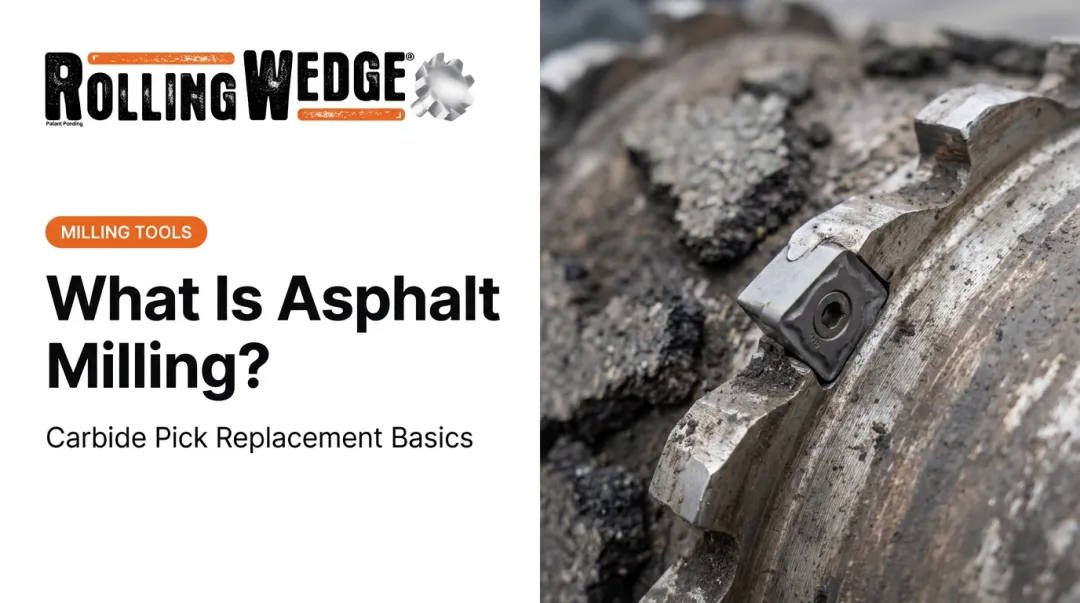
Here's a detail that doesn't get enough attention in most bids: the cutting technology on the milling drum itself changes how the job goes. Traditional carbide picks cut by hammering and chiseling into asphalt, which causes the picks to wear unevenly and creates a noticeable "bounce" in the machine as they degrade.
That bounce shakes both the equipment and the operator, and it can leave humps in the milled surface that telegraph straight through the new overlay.
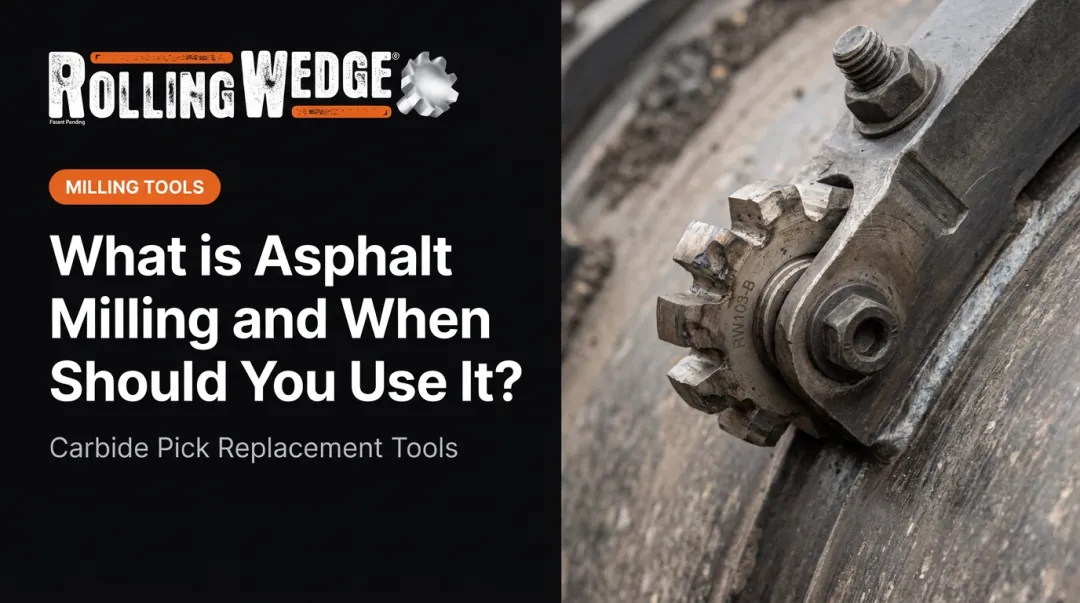
Rolling Wedge Asphalt Milling tools, manufactured in Peoria, Illinois, take a different approach: a rolling-wedging-lifting action that exploits asphalt's low tensile strength instead of brute-force impact. In practice, that means steadier, bounce-free forward motion and a more uniform milled surface.
It's also why we've seen these tools hold up 10 times longer than carbide picks in the field, needing replacement every 1-3 months instead of twice a week. On a large commercial job, that difference alone can save a contractor dozens of downtime hours.
Step 1: Milling the Surface
The cold planer's rotating drum grinds the old asphalt to the target depth, guided by laser or string-line controls to keep the cut consistent across the lot. A conveyor moves the millings onto waiting trucks. Most of that reclaimed asphalt pavement (RAP) doesn't go to a landfill: industry survey data shows 99.5% of asphalt producers now use RAP, with the vast majority blended straight back into new mix.
Step 2: Cleaning and Prepping the Base
Crews sweep residual grit and debris from the milled surface, a step that matters more than it sounds like it should, since leftover dust weakens the bond between layers. The exposed base gets inspected for cracks or soft spots that need repair before paving continues. Once it's clean, a tack coat goes down to help the new asphalt grip the old surface.
Step 3: Paving and Compaction
Hot mix asphalt is laid to match the milled depth, screeded to the correct grade, and compacted in multiple passes while the mix is still hot enough to densify properly. Compaction is what determines long-term durability: a poorly compacted mat lets in water and air, accelerating failure. After paving, the lot needs a cool-down period (temperature-dependent, not a fixed clock time) before it reopens to traffic.
When and Where Milling & Paving Is Applied
This process scales across an enormous range of properties. A residential driveway might get milled with a skidsteer attachment in an afternoon.
A 100,000-square-foot hospital lot needs a large cold planer and a milling train instead. Even at that scale, the lot can realistically be milled, prepped, and repaved in a couple of days when the crew is set up efficiently.
Common triggers that lead a property manager to schedule milling and paving:
- Raveling (aggregate loosening from the surface)
- Alligator cracking that's progressing toward potholes
- Standing water or drainage complaints from tenants
- Faded, oxidized surface across large sections of the lot
Milling and paving is condition-based rehabilitation, not routine maintenance. Many property managers plan around a 15- to 20-year cycle, though traffic volume, climate, and upkeep history all shift that window by several years in either direction.
Equipment technology plays a bigger role in scheduling than most people expect. Tool wear rates on the milling drum directly affect how long a job takes, and swapping worn tools eats into billable hours on every large job.
Changeover time varies by tool type:
- Carbide picks: 1-2 hours per changeover, needed roughly twice a week on high-volume jobs
- Rolling Wedge tools: about 20 minutes off a 24-inch drum, with replacement intervals of 1-3 months
These tools mount on equipment ranging from CAT skidsteers to full-scale Roadtec cold planers, so the timeline benefit applies across equipment classes rather than one machine type.
Common Misconceptions & When Milling and Paving May Not Be the Right Choice
The biggest misconception is treating milling and paving as interchangeable with a plain overlay. It isn't. Skip the mill and you build up elevation with every resurfacing cycle, eventually creating drainage and curb-height problems that cost far more to fix than milling would have.
A second misconception: every resurfacing job needs full-depth milling. It doesn't. If wear is purely cosmetic (oxidation, minor surface cracking, no structural distress), a shallower mill or even a targeted overlay may be enough.
Milling and paving also isn't a fix for everything:
- Severe sub-base or structural failure requires full-depth reconstruction, not surface milling
- Budget constraints may call for a transitional approach: partial milling paired with a partial overlay rather than a full lot treatment
FHWA guidance identifies good candidates for surface treatments as pavements with low cracking, low rutting, and sound underlying structure, while pavements with structural failure, delamination, or severe roughness get excluded from that category entirely. That distinction matters when you're deciding between resurfacing and reconstruction.
One red flag worth watching for: a contractor who recommends mill and pave without ever assessing drainage or elevation on your lot. That's often a sign they're defaulting to a standard scope rather than tailoring the plan to what your pavement actually needs.
Conclusion
Milling and paving restores a worn parking lot's driving surface while protecting drainage, elevation, and ADA compliance in ways a direct overlay can't match. Understanding the process, not just the line-item price, helps property managers and contractors avoid the drainage and compliance headaches that show up years down the road.
The right approach depends on the pavement's actual condition, not a default scope applied to every lot. That informed decision safeguards the lot's long-term value.
Frequently Asked Questions
How much does milling a parking lot cost?
Cost depends on lot size, milling depth, base repairs needed, and regional labor and material rates. Get a site-specific quote rather than relying on general estimates, since scope variables shift the price significantly.
What does milling of a parking lot mean?
Milling means mechanically grinding off the top layer of worn asphalt using a rotating drum, preparing the surface for a fresh layer of hot mix asphalt.
Can asphalt millings be used for parking lots?
Yes. Milled asphalt (RAP) is commonly recycled into new hot mix asphalt or used as a base and sub-base material, including on parking lot projects.
Are millings better than gravel?
Properly blended RAP can match conventional base material for bearing capacity and durability, though performance drops once RAP content exceeds roughly 20-25% of the blend. Either option works for temporary or low-traffic surfaces with proper compaction and drainage.
How long does milling and paving a parking lot take?
Most commercial lots can be milled, prepped, and repaved within 1-3 days depending on size and access, with additional cure time needed before line striping.
How often should a parking lot be milled and repaved?
Most commercial lots need milling and repaving roughly every 15-20 years, though traffic load, climate, and maintenance history all affect that timeline.